Scientific research relies on a lot of paper: PDFs of individual articles, lists of papers from searches (e.g. PubMed), individual annotations from papers, reviews, and books. In my case, I have seen the majority of what I find but can’t annotate immediately, filed under ‘to read’. Some papers have been there for more than 15 years, still waiting, still unread. Recently, after reading a book on how to take good notes, I decided that it was time to claw back (or unearth) some of that knowledge.
The method behind this isn’t new. In the 1950s, sociologist Niklas Luhmann built a slip-box (Zettelkasten) of roughly 90,000 index cards, each holding one idea, cross-referenced to related cards by hand-written numbers. He credited the system with the volume of his output: over 70 books and 400 articles across sociology, law, and systems theory. The core principle still holds: atomic notes (one idea per note) connected by explicit links outperform folders and tags for long-term thinking, because the connections between ideas are as valuable as the ideas themselves.
I am not organised enough to create and maintain a slip-box. However, I’ve been trying to engage with some of the multiple programs available for storing and cross-referencing information. In the end, I settled for Obsidian, which is a modern platform for running a Zettelkasten and powerful enough to serve as a personal knowledge manager (PKM).
Notes are plain markdown files stored locally, linked with [[double brackets]], and rendered as a graph so you can see how a note on enzyme kinetics connects to one on regulatory policy or a chapter from an unrelated book. Because the files are just text, the system works the same whether the notes come from molecular biology, drug regulation, or organizational theory. I have also found some of its limitations when trying to generate more mathematical notes and derivations.
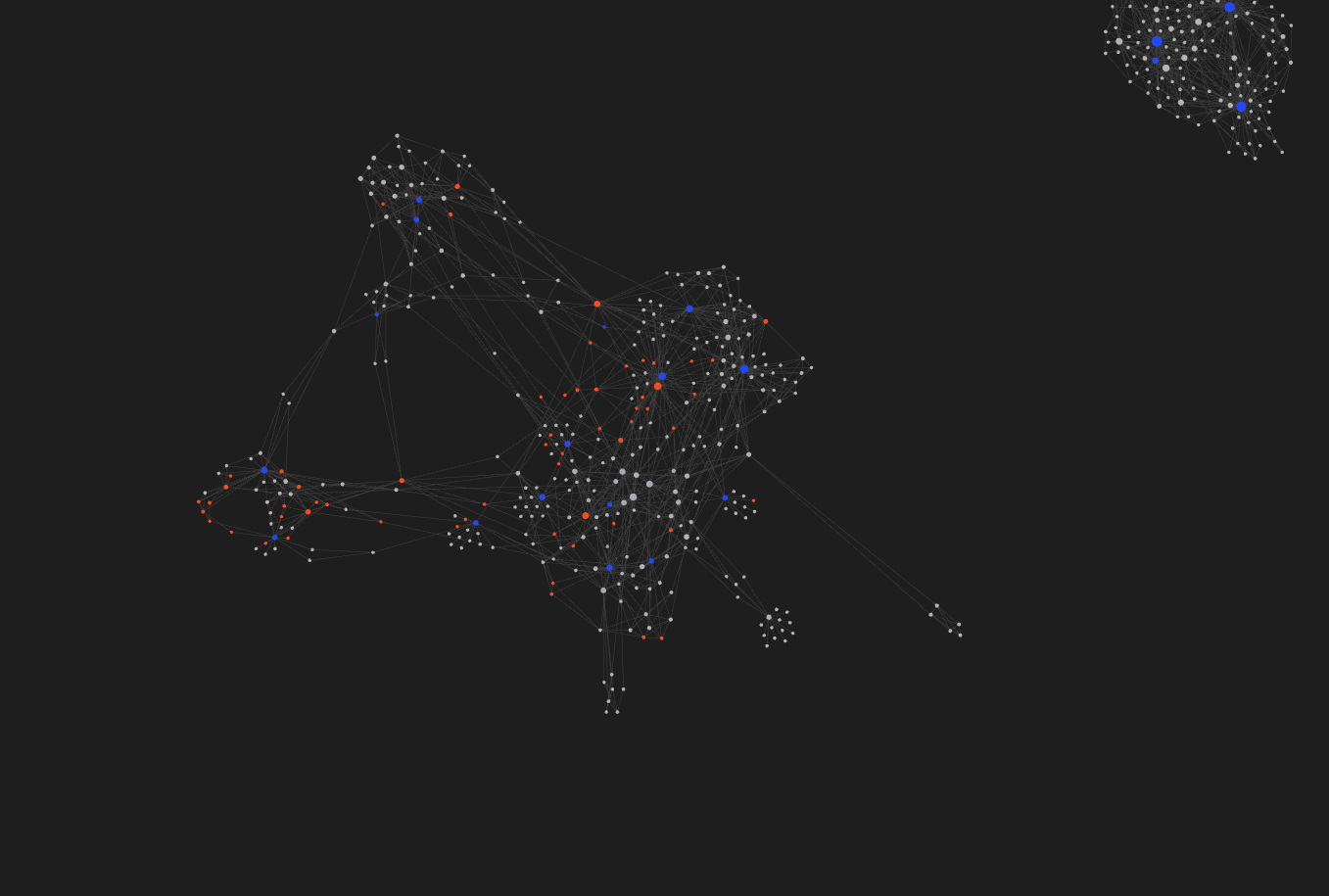
Still, this is something I had been building for the last 2 years and making very limited progress, until I decided to bring in AI to help. The result has been a set of skills to help build, curate, and link a PKM.
For instance, if I download a new paper: adding-one-pdf looks up its DOI, renames the file, writes a four-point summary — hypothesis, strongest evidence, main weakness, takeaway — scores it for robustness, and files both into the correct vault. It then scans the PKM system to identify related papers and what makes them related. For a bundle of papers, I created individual skills to take the same steps as a batch.
Other skills handle material that isn’t a paper — a Kindle/ePUB highlight or an annotated PDF becomes one atomic quote card per highlight, with surrounding context and bibliographic metadata attached automatically.
Discovering links to what is already in the PKM is half of what the Zettelkasten method depends on. To solve that, I also created skills to link older notes to newer ones.

Crucially, I have not removed myself from the loop. Aside from checking that the PKM remains free of AI-slop and AI-artifacts, I can still add notes manually, identify cross-links that the AI didn’t see and develop novel ideas from the cross-roads. The Zettelkast method has its origin in the humanities but, so far, I am confident that it works for molecular biology, directed evolution and for engineering biology. Some of the ideas I am developing now have appeared as notes I added, and that I started linking to others in the system – until they were developed enough to take a direction of their own.

 Synthetic Biology through directed evolution